Study & practise
Find the right practice activity
All eleven activities, what they train, and why some need particular cards or languages.
Android · Updated 23 October 2026
On this page
Practice activities are ungraded. They do not write normal review grades or clear due reviews. Most use vocabulary you have already met; not every imported Anki card can provide the structured information an activity needs.
Start a session
- Open Library → your deck → Learning modes.
- Scroll to Practice and choose an activity.
- Follow its prompt. Use the session’s retry or play-again control if you want another round.
- Return to Flow for scheduled reviews.
An empty activity usually means the deck lacks enough eligible words, examples, gender information or review history. Review some cards first or choose a better-suited deck.
Words, meanings and spelling
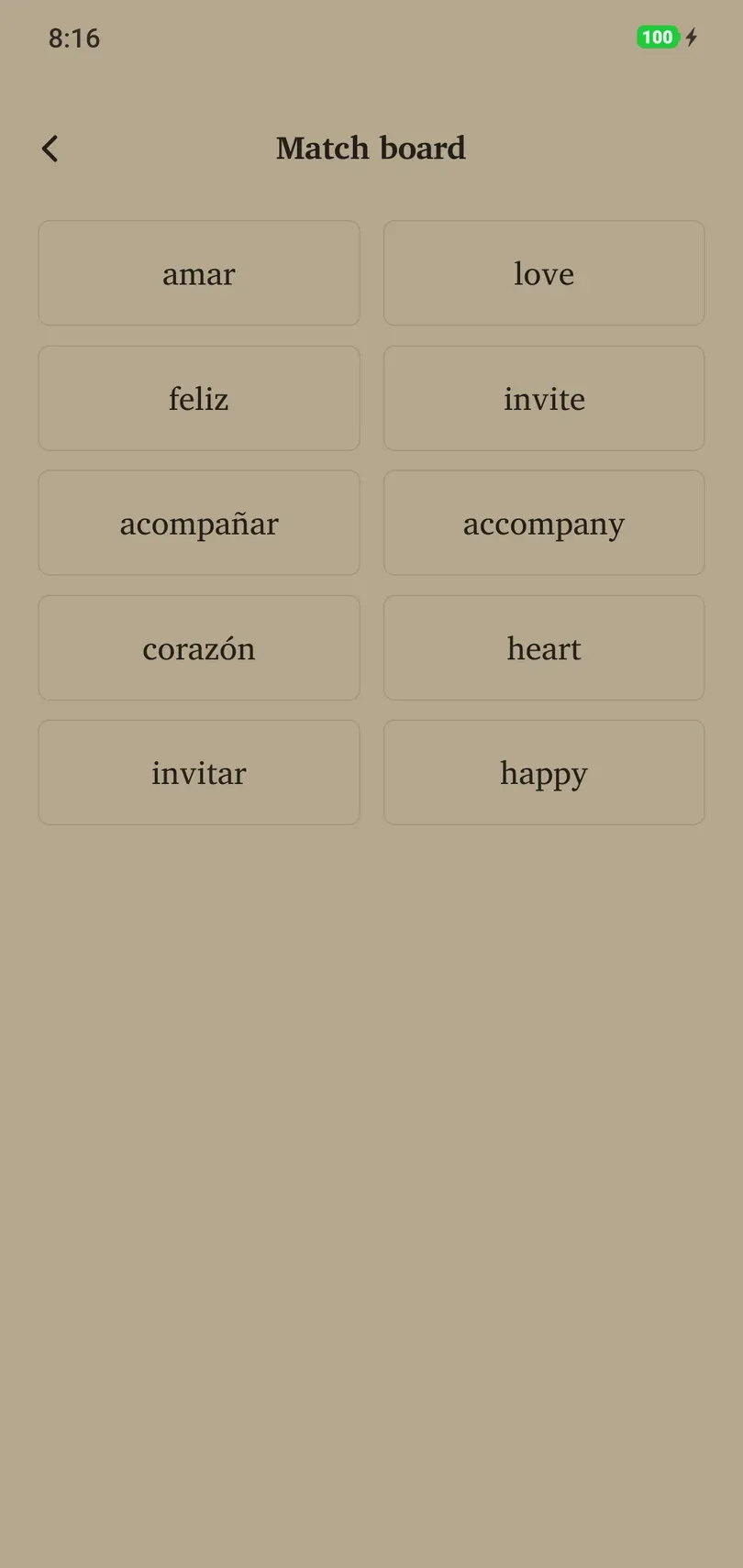
- Match board: pair words with their meanings. It needs at least three distinct usable pairs; repeated spellings or meanings cannot fill ambiguous positions.
- Fill the gap: choose the missing word in an example sentence. It needs a usable example and enough alternative words.
- Letter tiles: arrange letters to spell the prompted word.
- Sentence builder: arrange words to reconstruct an example sentence. Cards need suitable examples.
- Tough words: revisit your most-forgotten words in different formats. Due reviews still belong in Flow; this is extra practice.
Listening activities
- Dictation: listen to a word, then type it.
- Sentence listen: hear an example sentence and select the word inside it.
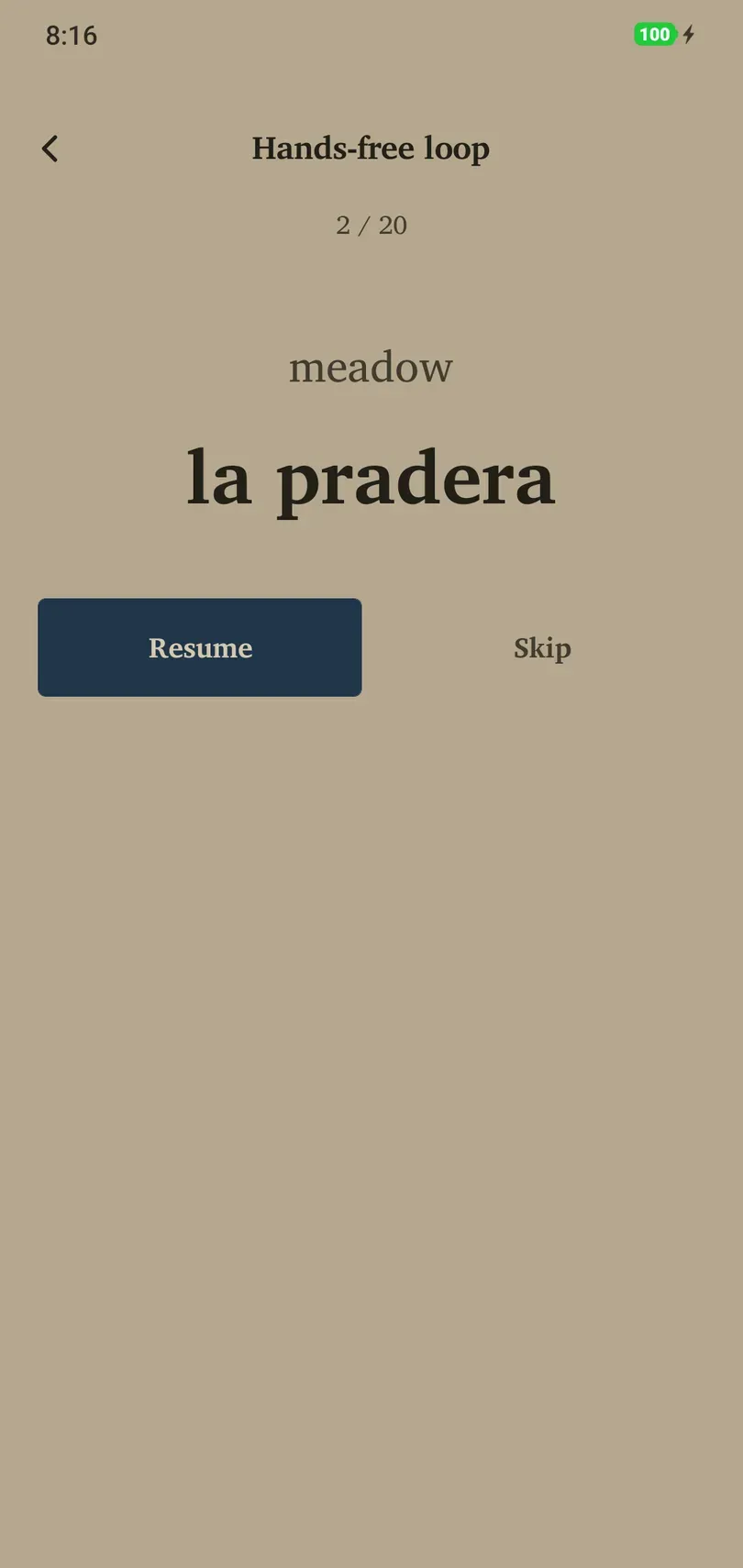
- Hands-free loop: hear the meaning, say the target word, and listen to the answer. Use the on-screen playback controls to pause and adjust the session where offered.
These activities need usable pronunciation voices. Sentence listen also needs examples. Hands-free practice is a chance to recall aloud; the app does not assess your spoken answer.
Gender and Polish aspect
Grammar sprint asks for a noun’s grammatical gender. It is shown for languages with grammatical gender and needs nouns whose gender is known. The choices use articles where the language has them, such as el/la or der/die/das; otherwise they name the genders.
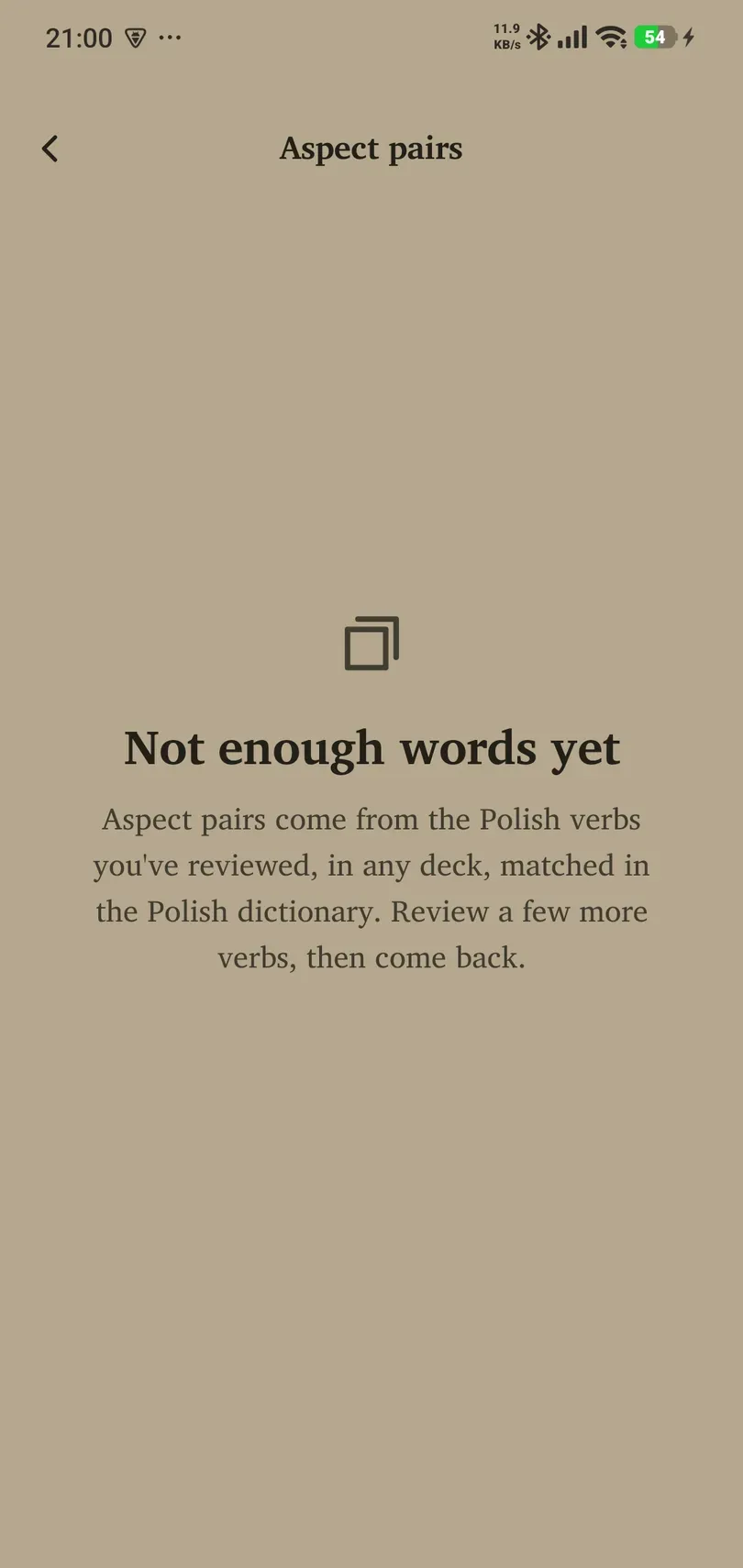
Aspect pairs is shown for Polish decks. Match an imperfective verb with its perfective partner. It draws on Polish verbs you have already reviewed across your decks, matched with their aspect partners in the Polish → English dictionary. It needs that dictionary and enough suitable reviewed verbs; simply opening an empty Polish deck will not create a game.
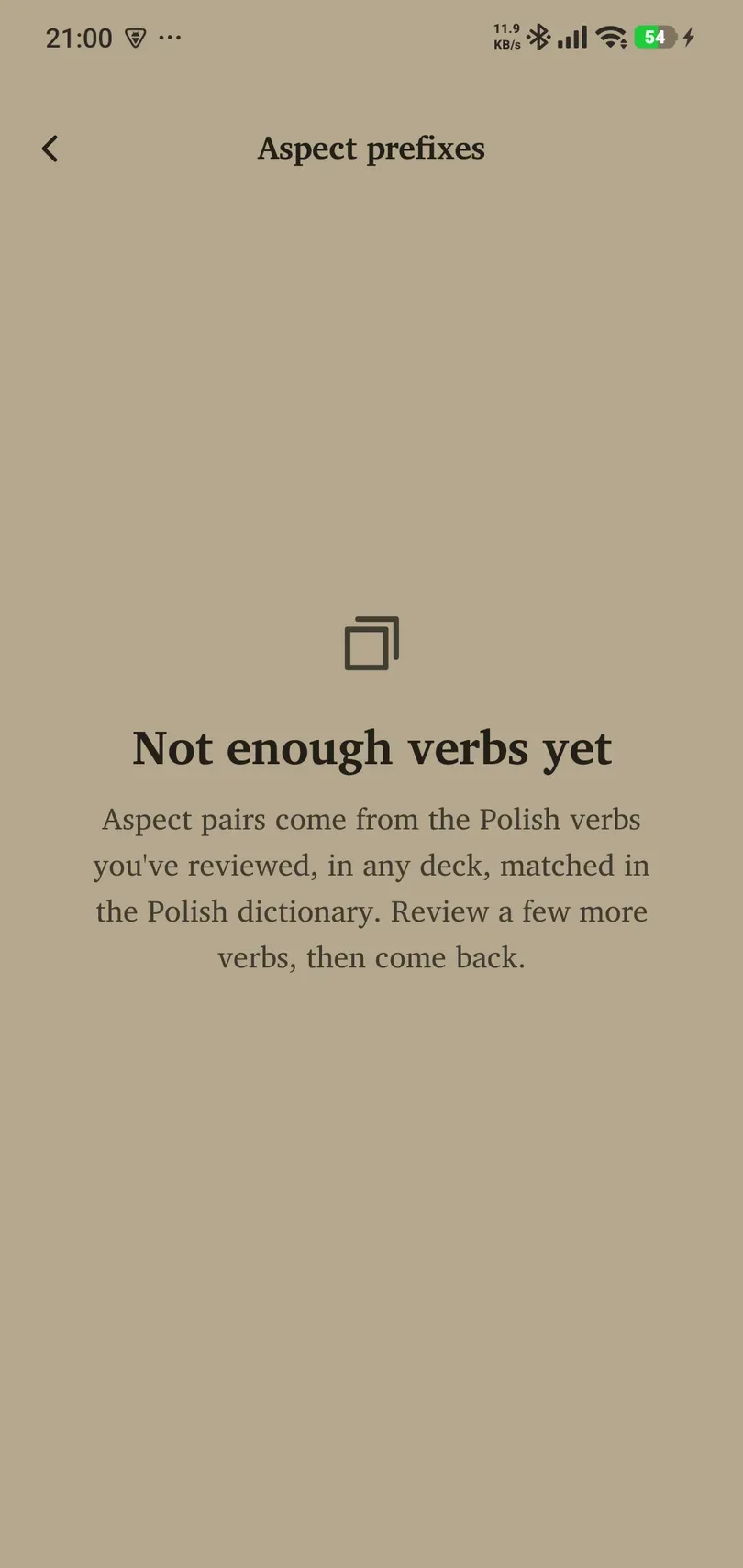
Aspect prefixes is also Polish-only and uses the same reviewed-verb/dictionary source. Choose the prefix that creates the requested perfective verb. If the app says there are not enough verbs, review more suitable Polish verbs and check the Polish dictionary before returning. These activities do not appear for Spanish decks.